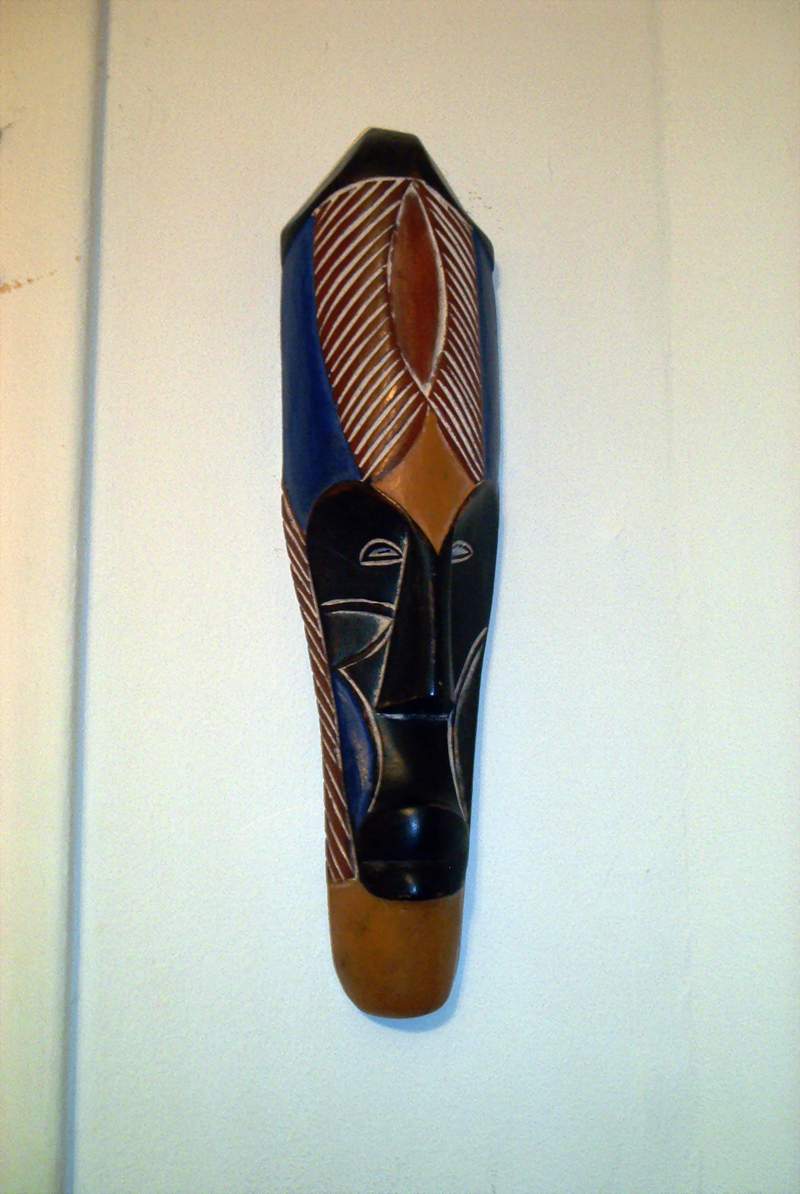
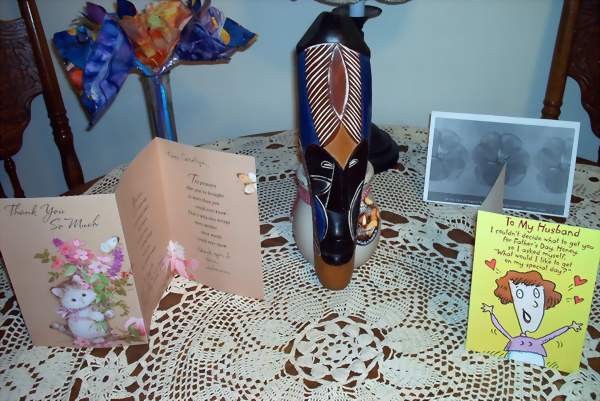
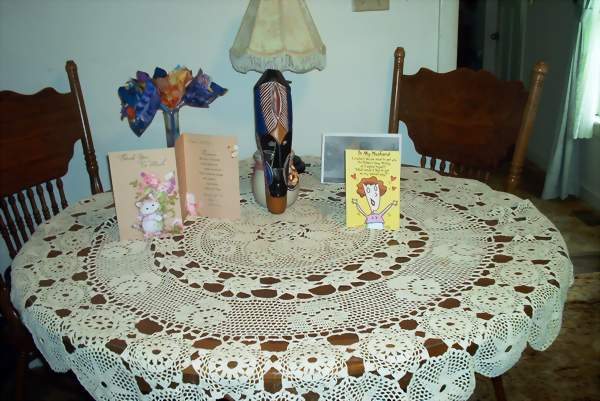
Thanks for the African Mask Jim
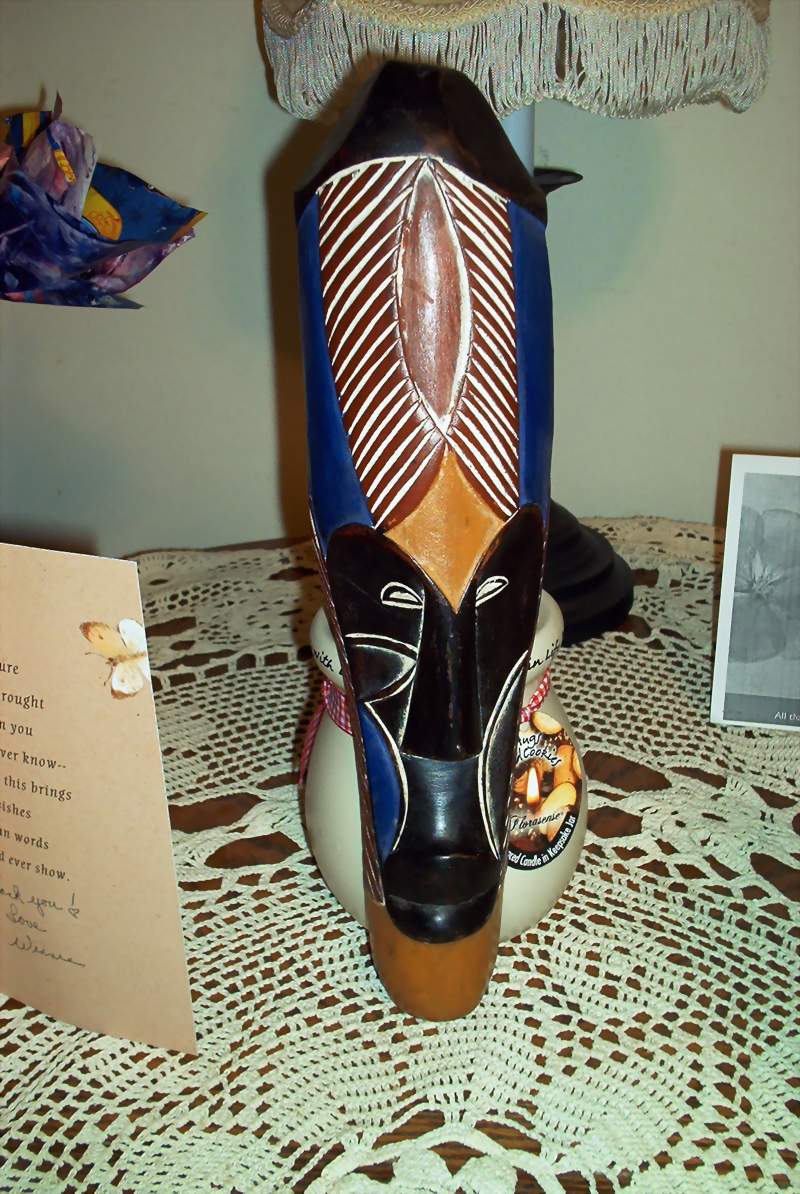

HISTORY OF THE FANG MASK
African Art of the Fang tribe
The fang people are spread over a vast area along the Atlantic
coast line of equatorial Africa and can be found in Cameroon
equatorial Guinea and Gabon namely along the bank of the Ogowe
river.
The Fang people used masks in their secret societies. Members of
this male society wore the Ngil masks (picture to the left)
during the initiation of new members and the persecution of
wrongdoers. Masqueraders, clad in raffia costumes and attended by
helpers, would materialize in the village after dark, illuminated
by flickering torchlight.
Fang masks, such as those worn by itinerant troubadours and for
hunting and punishing sorcerers, are painted white with facial
features outlined in black. Typical are large, elongated masks
covered with kaolin and featuring a face that was usually
heart-shaped with a long, fine nose. Apparently it have been
linked with the dead, since white is their color. The Ngontang
dance society also used white masks, sometimes in the form of a
four-sided helmet-mask with bulging forehead and eyebrows in
heart-shaped arcs.
The So, or red antelope, was connected with initiation that
lasted several months, the masks used during this ritual had long
horns. Passport masks, were attached to arms of the maskers.
This great rain forest region in the Fang territory is a plateau
of middle altitude, with innumerable waters with falls and rapids
rendering navigation for the most part impossible, and with a
climate typically equatorial.
Fang are principally hunters but also agriculturists. Their
social structure is based on a clan, a group of individuals with
a common ancestor. The ensemble of Fang peoples practice a cult
devoted to ancestor lineages, the bieri, whose aim is to both
protect themselves from the deceased and to recruit and aid in
matters of daily life. This familial cult does not monopolize the
Fang’s religious universe, for it coexists with other
beliefs and rituals of a more collective character.
The bieri, gave rise to remarkable wooden sculpture. The bieri,
or ancestor figure, would be consulted when the village was to
change location, or when a new crop was planted, during a
palaver, or before going hunting, fishing, or to war. But once
separated from the reliquary chest, the sculpted object would
lose its sacred value and could be destroyed. The ritual
consisted of prayers, libations, and sacrifices offered to the
ancestor, whose scull would be rubbed with powder and paint each
time. With its large head, long body, and short extremities, the
Fang bieri had the proportion of a newborn, thus emphasizing the
group’s continuity with its ancestor and with the three
classes of the society: the “not-yet-born,” the living,
and the dead. The relics were essentially skull fragments, or
sometimes complete skulls, jawbones, teeth and small bones. The
bieri also served for therapeutic rituals and, above all, for the
initiation of young males during the great so festival. 
Click here for more information on Fang.
Download African Puzzle (free)